

We’re 48 hours out. Voters have never been this sour on their own members of Congress heading into a midterm, or this engaged. Models and markets expect Democrats to take the House and probably the Senate. But polls can miss in either direction, and this year nobody knows which way. Will it be a blue tide, a wave, a tsunami, or a red riptide? And what should you watch for early if you hope to be in bed by 11pm (asking for a friend)?
1. Fewest ever feel their own Member merits reelection.

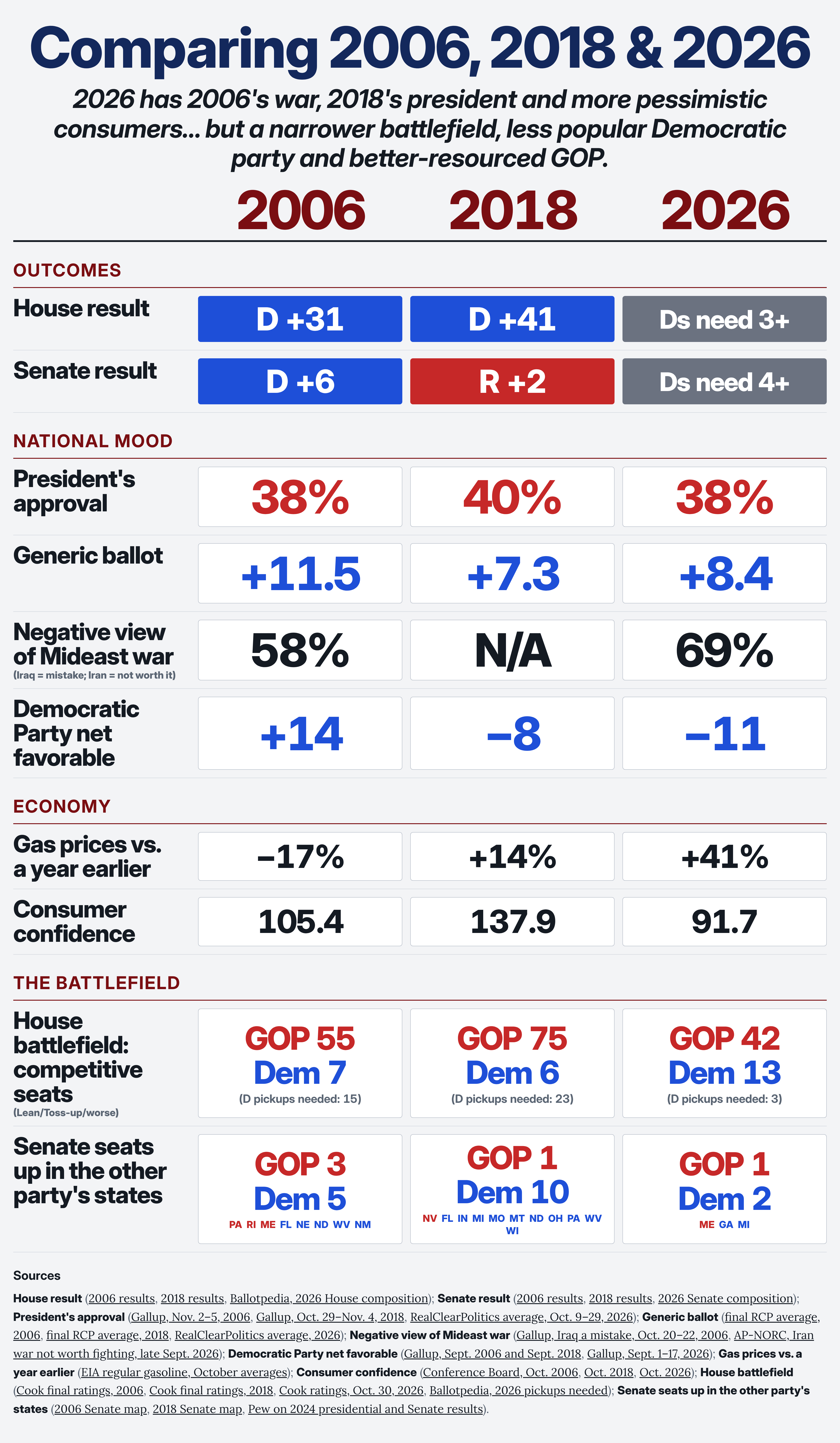
2. How 2026 stacks up vs other recent midterms when the GOP held the WH.
3. Expert models & prediction markets forecast Democrats winning the Senate.

4. Record share of U.S. adults have given “quite a lot of thought” to this election.

Gallup also notes:
A significantly higher share of Democrats and Democratic-leaning independents (58%) than Republicans and Republican-leaning independents (48%) say they are more enthusiastic than usual about voting.
5. Here’s “Every way the polls could be wrong, in one chart.”

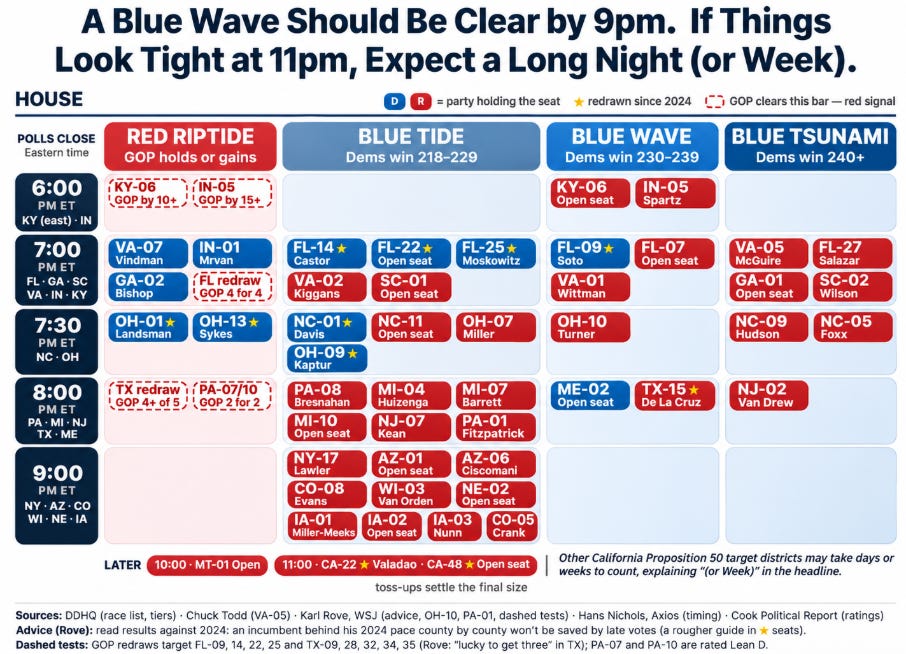
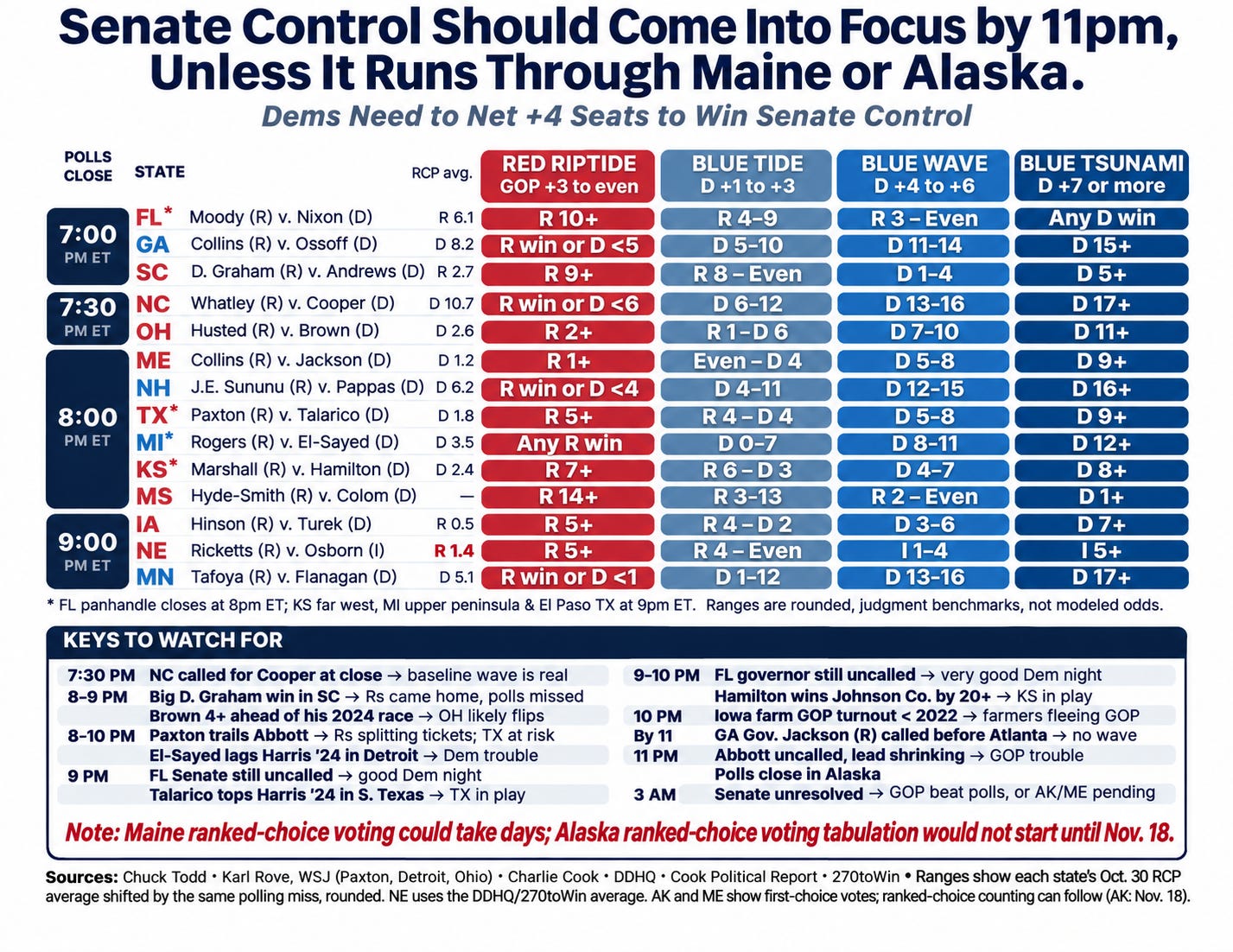
6. If you hope to go to bed by 11pm, here are early “tells” for predicting outcomes.
SO WHAT
The 2026 elections may look like 2006 or 2018 in the national polls, but the battlefield is much narrower and the voters who could decide the outcome are unusually difficult to predict.
As the great Charlie Cook argues, this may be a “unicorn election,” driven less by traditional swing voters than by disaffected Republicans who haven’t decided whether to come home (vote GOP), stay home (not vote) or drive home their discontent (voting for Democrats).
If Republican support erodes in traditionally safe districts and states early Tuesday evening, a blue wave may become apparent long before the full results are known. If those voters return to their party, the election could be far closer than today’s polls suggest.

VIDEO —
Once again, Democrats are on edge…
Election Day is only 48 hours away. If that doesn’t blow your mind, maybe this will: The classic movie this poster parodies was closer in time to the attack on Pearl Harbor (41 years preceding it) than today (almost 44 years since).

I love getting this newsletter each week. THanks. I'd love to have the charts updated with 2026 numbers as they finish up AK and MS. And the rest. Don't have to be a full column, just maybe a link the them for safe keeping.
Charts in 6 are the most interesting. I wonder if Chis Cillizza and Chuck Todd would concur with you on them?