

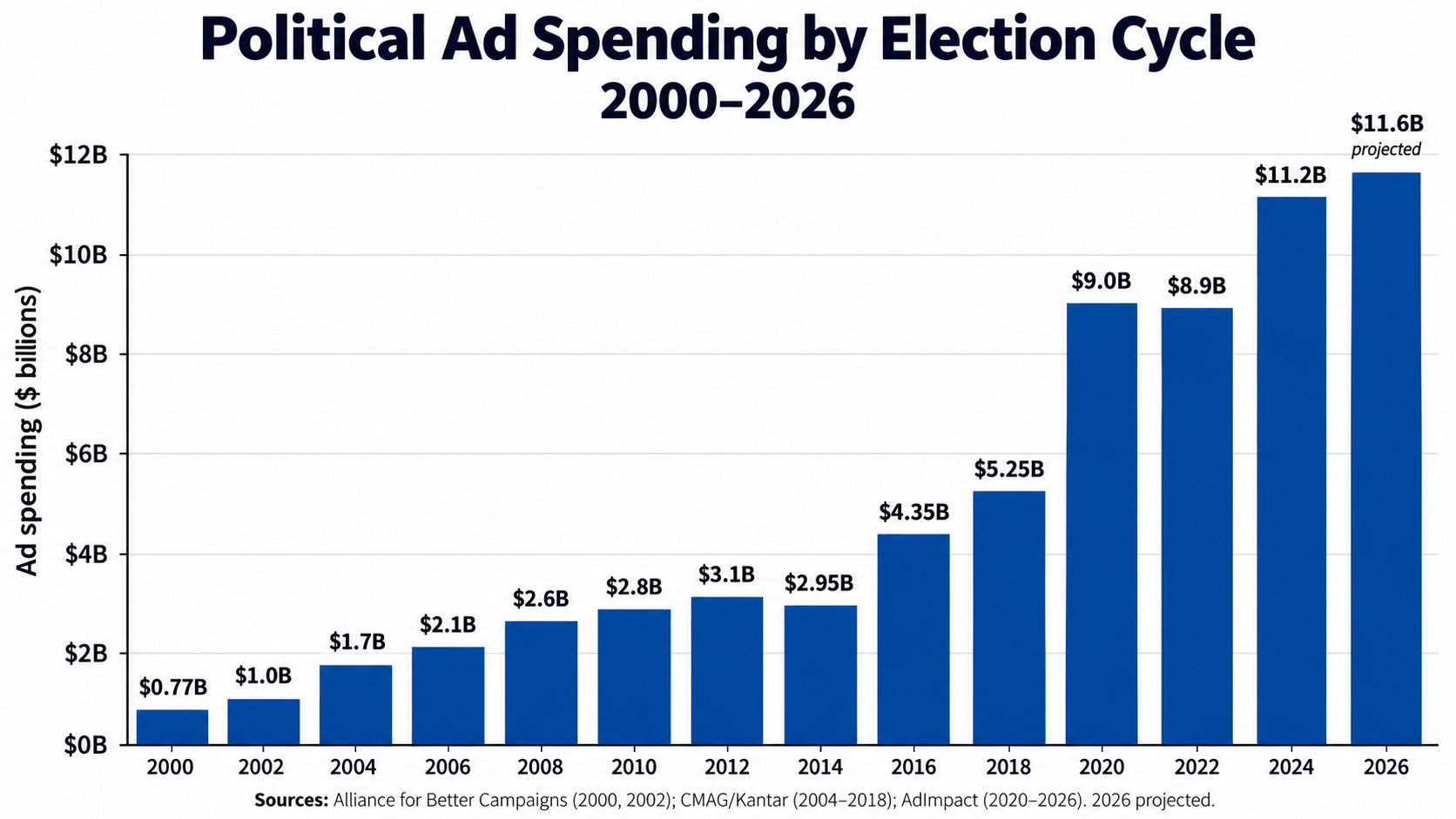
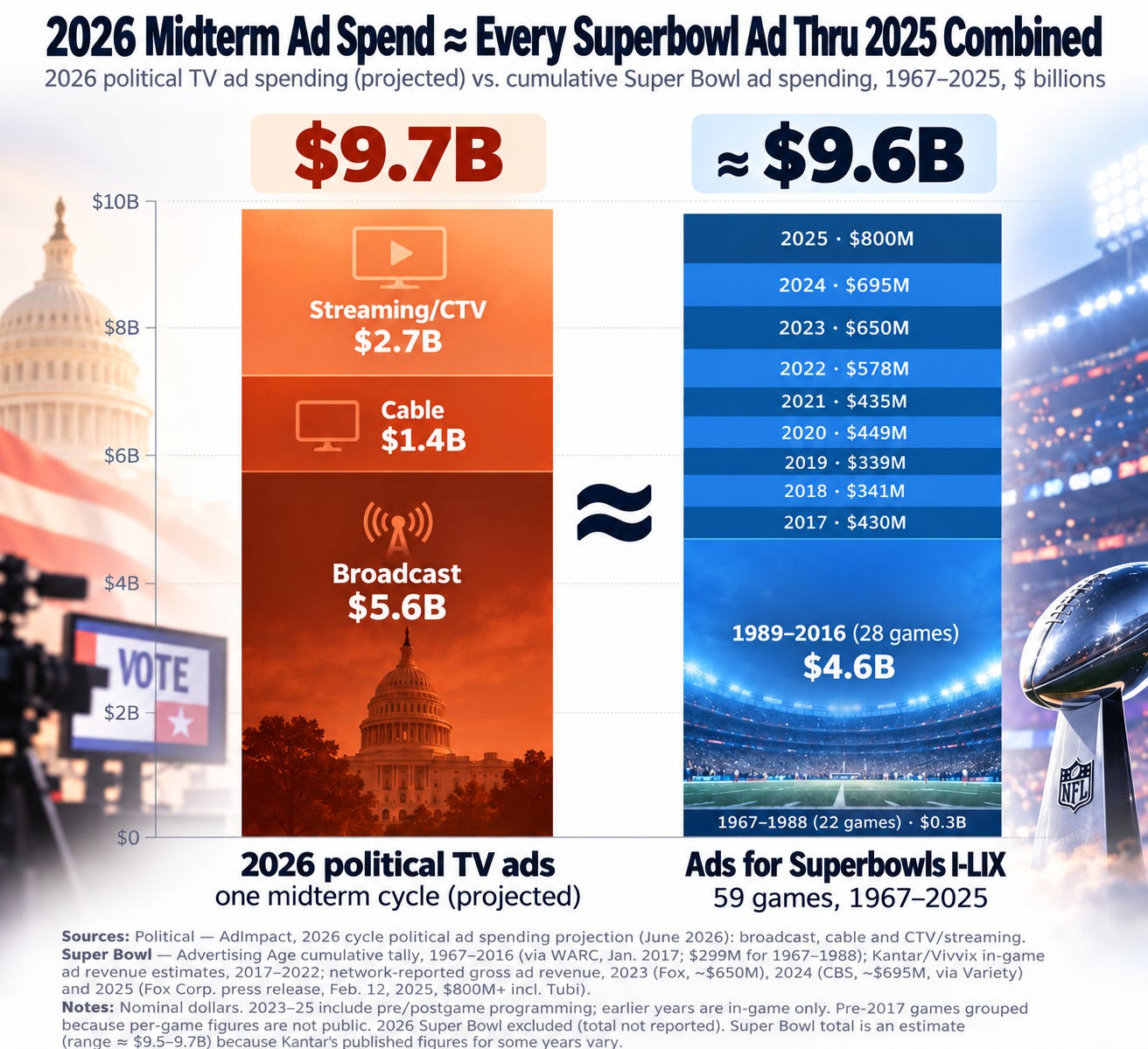
The 2026 midterms will be the most expensive election cycle in American history: $11.6 billion in political ads, topping 2024’s $11.2 billion and 2022’s $8.9 billion. The TV portion alone roughly equals what advertisers spent on the first 59 Super Bowls combined (through 2025).
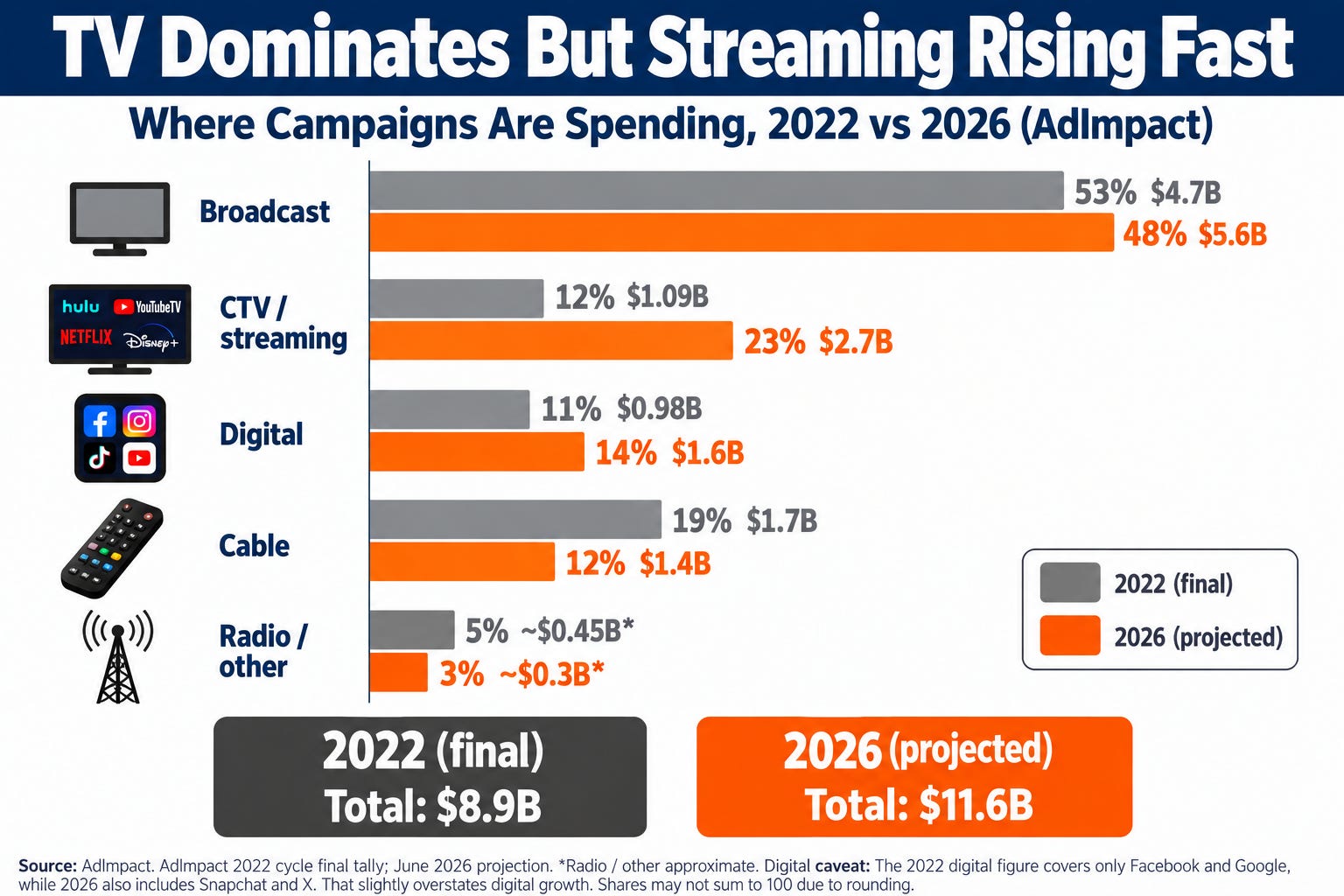
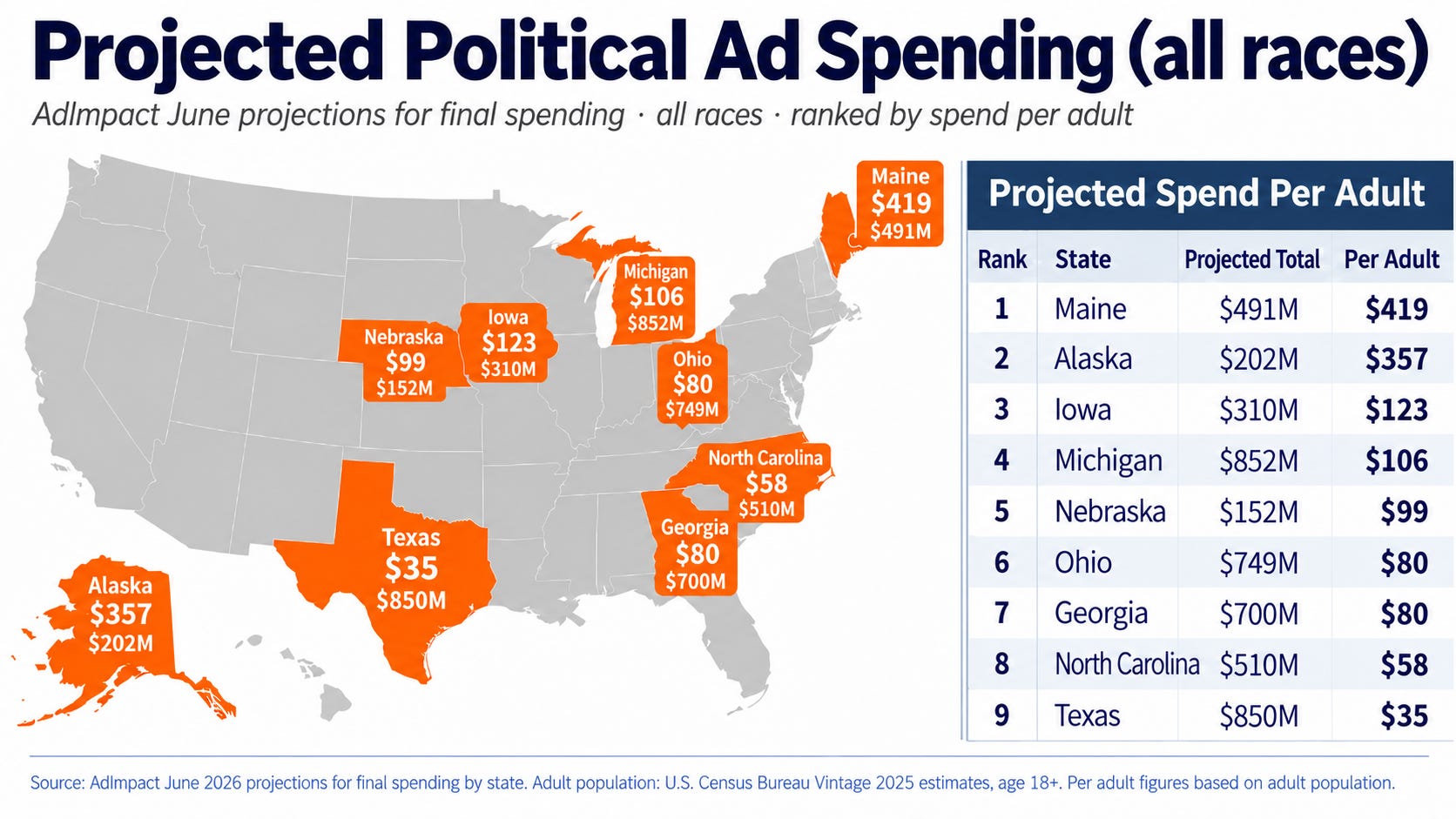
What’s all that money buying? Economic grievance. Democrats lead with cost of living, Republicans with taxes. Both parties are increasingly railing against big business. Democrats are also running against their own party establishment. Broadcast TV still captures nearly half of every ad dollar, but streaming has doubled since the 2022 midterms. And if you live in Maine, you’re absorbing ~$419 per adult in ads, about enough money to buy groceries for a month.
1. 2026 is set to break records for political ad spending
How much is that? Spending on 2026 TV ads will roughly equal the amount advertisers spent during the first 59 Super Bowls combined…
2. It’s still “The Economy Stupid”
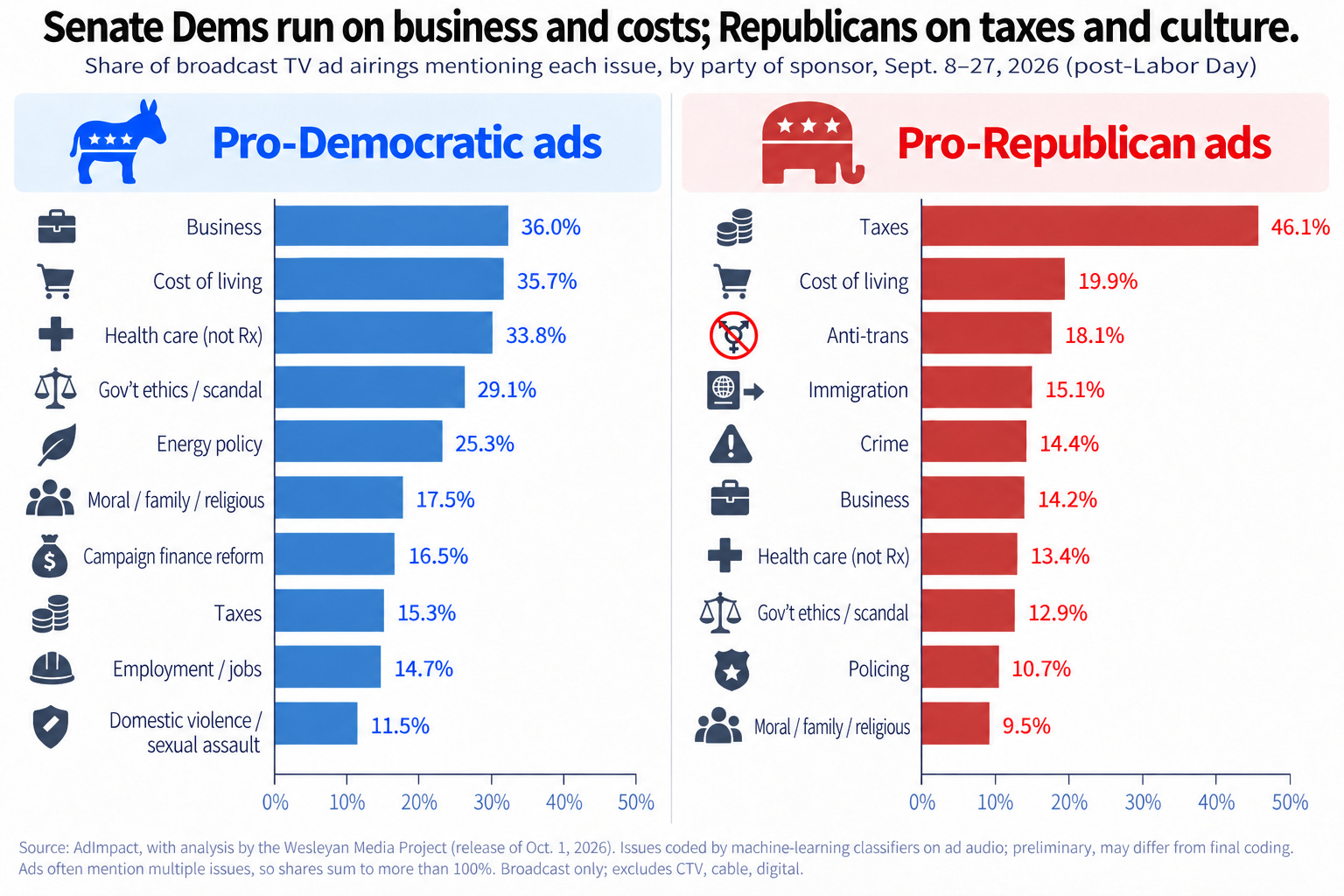
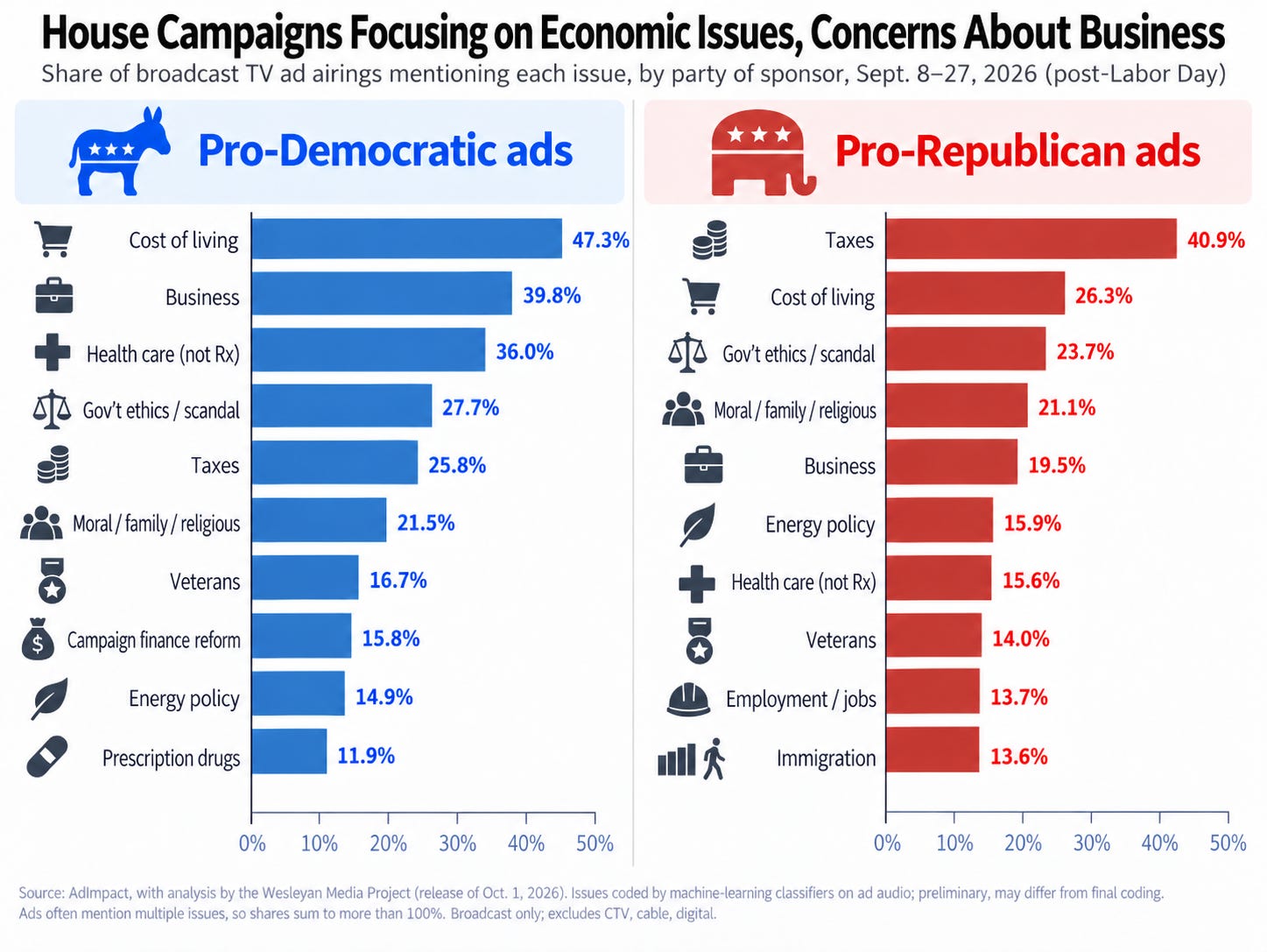
3. Populism is rising with a spike in campaign ads targeting business
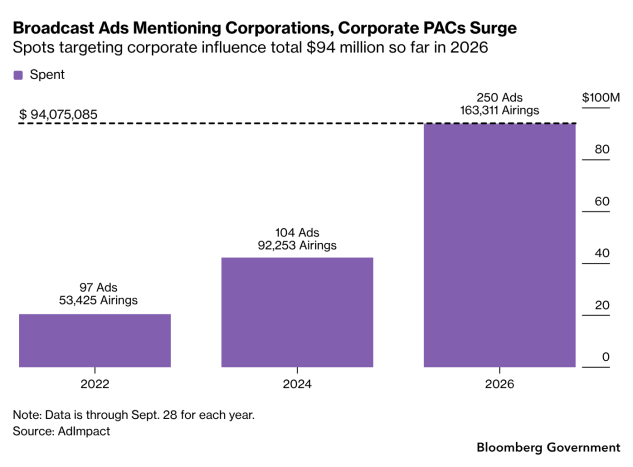
While Democrats are far likelier to criticize business, attacks are increasingly bipartisan. As Politico recently observed:
“On the television airwaves in central Arkansas, Republican House Financial Services Chair French Hill is touting his efforts to ‘keep Wall Street from buying up our neighborhoods.’ In Michigan, GOP Senate hopeful Mike Rogers is vowing to ‘take on Big Pharma” companies that “are ripping American families off.’ And in northeast Iowa, an ad boosting Republican House candidate Joe Mitchell declares that he ‘will be the only Republican refusing corporate PAC money’ in Washington.
It’s a flashing warning sign for corporate America: On the right — and not just the far right — it has increasingly become in vogue to bash big business.”
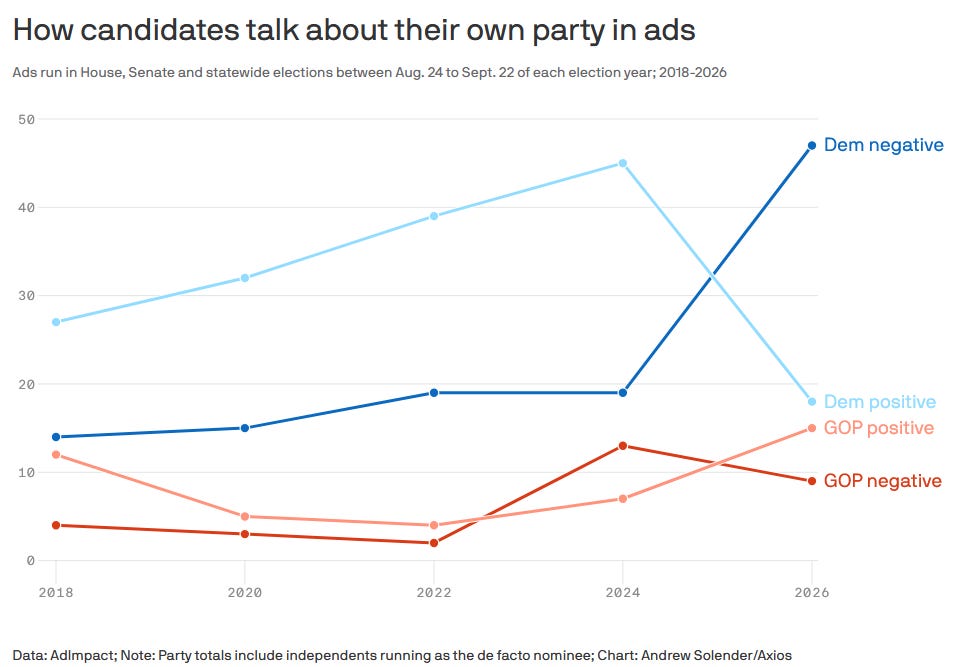
4. Democratic candidates are significantly more negative toward their own party in ads
“Democrats are adopting a drastically more negative tone toward their own party in the 2026 midterm elections, swapping promises of bipartisan collaboration with vows to “take on corruption in both parties.”
Why it matters: This surge in political friendly fire reflects the extraordinary level of anger candidates are seeing from their voters toward the Democratic Party and the national political establishment.”
Perhaps that’s why voters had a less positive image of the Democratic party in NBC News’ latest poll?

5. TV remains the go-to political ad platform but streaming doubled in four years
6. Maine voters may see ~$419 in political ads per adult, far more than any other state
SO WHAT?
Campaign ads preview the governing agenda. Candidates are telling us what they think voters want, and what they’ll feel bound to deliver in 2027. What’s clear:
Affordability is the agenda. Whoever wins, expect the next Congress to chase prices in housing, health care, energy and groceries.
Populism is rising. Bashing business is now bipartisan. “Business” is the #1 issue in Democratic Senate ads, and Republicans are taking on Wall Street and Big Pharma.
$11.6 billion in ads with a growing message from both parties: voters are pissed about what things cost and suspicious of who's profiting. Plan accordingly.
VIDEO
Why are voters so angry when the economic data looks pretty darn good? Economics writer Ben Carlson has a theory we discussed this week:

It could be argued, "Meh, this just continues a trend of more political spending." But it could also be argued that, as I have said for over 2 years, the D party is facing extinction as a national party (will still, like the Federalists of 1814) have two powerful regional pockets, but can no longer compete nationally. Looking at the fact that spending suggests BOTH parties believe this now, and that the Ds are far more negative toward their own party and can't get elected "as" Democrats is quite telling and, I think, supportive of the extinction hypoithesis.